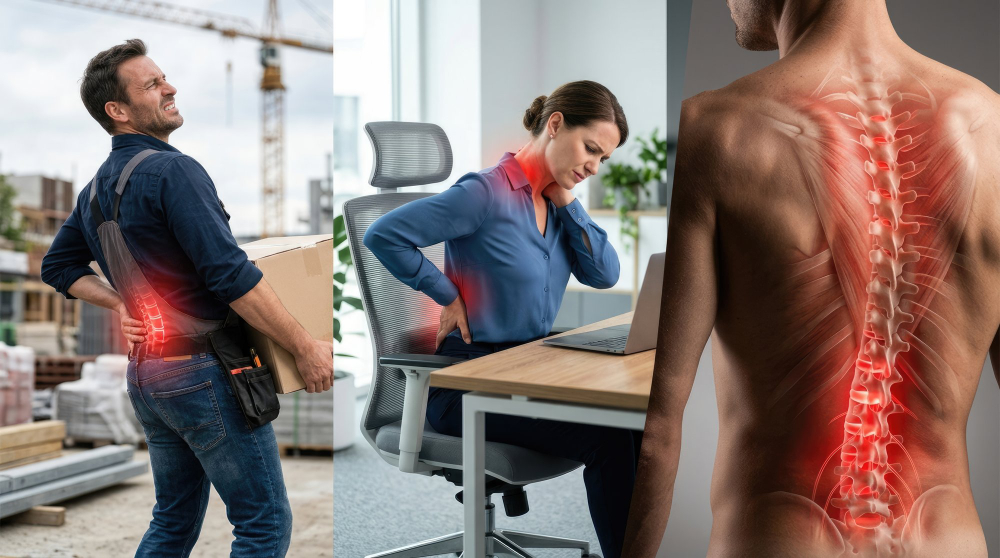
Back pain can make daily life hard. Often, people wonder about the difference between slip disc and muscle strain. These two problems cause pain, but they are not the same. Knowing the signs and causes helps you get the right care. In this blog, we explain slip disc vs muscle strain, their symptoms, and how to tell them apart.
What Is a Slip Disc?
A slip disc, also called a herniated disc, happens when a soft part inside your spine pushes out. This can press on nearby nerves. As a result, you may feel pain, numbness, or weakness. According to the World Health Organization, slip discs are a common cause of back pain in adults.
For example, a slipped disc in the lower back can make your leg hurt or tingle.
What Is a Muscle Strain?
Muscle strain means a muscle or tendon gets stretched or torn. This often happens from lifting heavy things or sudden movements. Unlike a slip disc, muscle strain affects the soft tissues, not the spine itself. The Centers for Disease Control and Prevention note that muscle strains are a leading reason for back pain, especially in young people.
Sometimes, you may feel pain right after an injury. Other times, it builds up slowly.
Key Differences Between Slip Disc and Muscle Strain
Although both can cause back pain, there are clear differences between slip disc and muscle strain. Understanding these helps you find the right treatment.
Knowing these signs helps you talk to your doctor about your back pain causes.
Common Symptoms
Both slip disc and muscle strain can cause discomfort. However, their symptoms are different in some ways.
For instance, if you feel tingling or weakness, it may point to a slip disc.
Causes and Risk Factors
Several things can lead to slip disc or muscle strain. While some causes overlap, others are unique to each problem.
In many cases, not warming up before exercise can increase your risk of muscle strain. On the other hand, aging and wear and tear are common reasons for slip discs.
Diagnosis Methods
Doctors use several ways to find out if you have a slip disc or muscle strain. Early diagnosis helps guide the best treatment.
If your pain is severe or lasts a long time, your doctor may order more tests.
Treatment Options
Treatment depends on the cause of your back pain. Both slip disc and muscle strain often improve with simple steps. However, some cases need extra care.
According to the CDC, most people recover from muscle strain without surgery. For slip disc, surgery is rare but may be needed if symptoms do not improve.
Prevention Tips
Although not all back pain can be prevented, you can lower your risk with healthy habits. These tips help protect your back and muscles.
For example, walking and swimming are gentle ways to keep your back strong.
When to See a Doctor
Most back pain gets better with rest and care. However, sometimes you need to see a doctor right away. Watch for these signs:
If you notice any of these symptoms, seek medical help quickly. Early care can prevent more serious problems.
Conclusion
If you have back pain or are unsure about your symptoms, Dr.Vivek Sama is here to help. Book a consultation today to get expert advice and the right care for your needs.