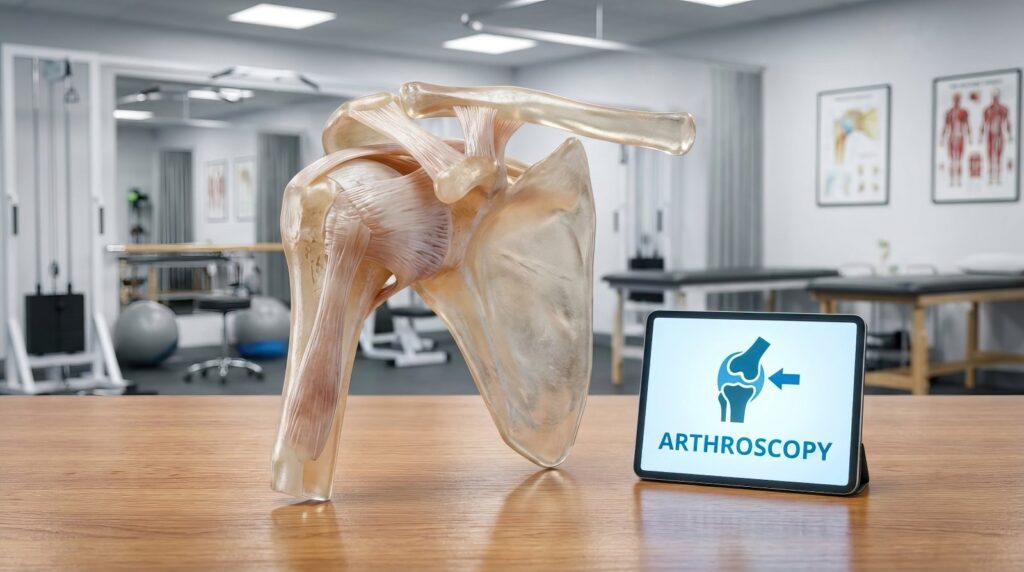
Introduction to Shoulder Arthroscopy
Shoulder arthroscopy is a minimally invasive shoulder surgery used to diagnose and treat shoulder pain. Doctors use this procedure to look inside your shoulder joint with a small camera. Because it uses tiny cuts, recovery is often faster than with open surgery. Many people choose shoulder arthroscopy for shoulder pain treatment when other options do not help.
What Is Shoulder Arthroscopy?
Shoulder arthroscopy is a surgical procedure. During this surgery, a doctor inserts a small camera, called an arthroscope, into your shoulder. This camera lets the doctor see inside your joint on a screen. The doctor can then fix problems using special tools. Since the cuts are small, there is less pain and a quicker recovery.
Common Symptoms and Conditions Treated
Doctors may suggest shoulder arthroscopy if you have ongoing shoulder pain or stiffness. Some common conditions treated with this surgery include:
For example, if you have trouble lifting your arm or feel sharp pain, your doctor may recommend this surgery.
Causes Leading to Shoulder Arthroscopy
Many causes can lead to the need for shoulder arthroscopy. Often, injuries from sports or accidents damage the shoulder. Overuse from repeated movements, such as throwing or lifting, can also cause problems. Sometimes, age-related wear and tear leads to joint damage. Because these issues may not heal on their own, surgery can help restore movement and reduce pain.
How Doctors Diagnose and Recommend Shoulder Arthroscopy
First, your doctor will ask about your symptoms and check your shoulder. They may order tests like X-rays or MRI scans to see inside the joint. If other treatments, such as rest, physical therapy, or medicine, do not work, your doctor may suggest shoulder arthroscopy. This decision is based on your pain level, how much your movement is limited, and the results of your tests.
Step-by-Step Overview of the Procedure
Shoulder arthroscopy is usually done in a hospital or surgery center. Here is what you can expect:
Because the cuts are small, there is less bleeding and scarring compared to open surgery.
Recovery Process and Timeline
After shoulder arthroscopy, recovery is often quicker than with traditional surgery. However, you will still need time to heal. Here is what to expect:
Because everyone heals differently, your doctor will guide your recovery plan.
Benefits and Potential Risks
Shoulder arthroscopy offers many benefits. For instance, it uses smaller cuts, which means less pain and faster healing. You may also have a lower risk of infection and less scarring. However, like any surgery, there are some risks. These may include:
Although most people recover well, it is important to follow your doctor’s advice to lower your risk of problems.
Prevention and Lifestyle Tips for Shoulder Health
While not all shoulder problems can be prevented, you can take steps to protect your joints. For example:
Because healthy habits can lower your risk of injury, make them part of your daily routine.
Conclusion
Shoulder arthroscopy is a safe and effective way to treat many shoulder problems. Since it is minimally invasive, recovery is often faster and less painful. If you have ongoing shoulder pain, consult Dr Vivek Sama, an orthopedic specialist for personalized advice on shoulder arthroscopy.