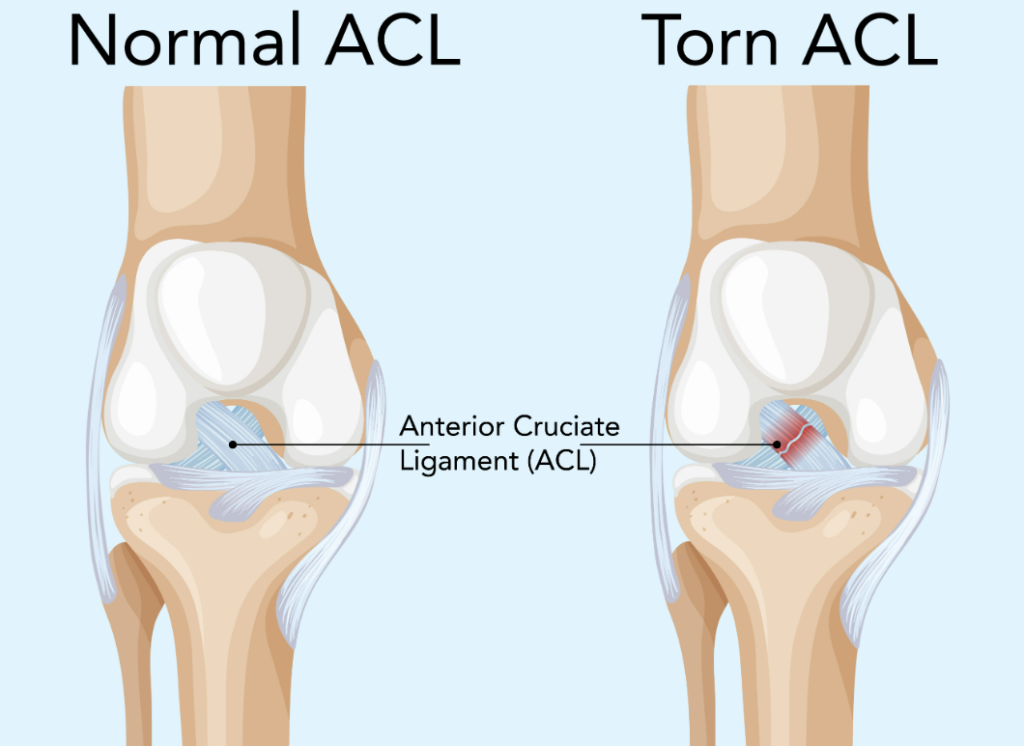
What is an ACL Injury?
The anterior cruciate ligament, or ACL, is a strong band in your knee. It helps keep your knee stable. An ACL injury means this ligament is stretched, torn, or damaged. Often, people hurt their ACL during sports or sudden movements. Because the ACL is important for knee movement, an injury can make walking or running hard. Early care is key for knee injury recovery.
Common Symptoms of ACL Injury
After an ACL injury, you may notice several signs. For example, you might hear a popping sound at the time of injury. Other symptoms include:
However, not everyone has all these symptoms. If you notice any of them, see a doctor soon.
Causes and Risk Factors
ACL injuries often happen during sports that involve quick stops or changes in direction. For instance, soccer, basketball, and skiing are common causes. But, anyone can injure their ACL. Some risk factors include:
Additionally, women may have a higher risk due to body structure and muscle strength.
Diagnosis of ACL Injury
Doctors use several steps to diagnose an ACL injury. First, they ask about your symptoms and how the injury happened. Next, they examine your knee for swelling, pain, and movement. Often, they use tests like:
Early diagnosis helps guide the best ACL tear treatment plan.
Non-Surgical Treatment Options
Not every ACL injury needs surgery. In many cases, non-surgical treatments work well, especially for less active people. These options include:
With these steps, some people regain knee function without surgery. However, active people may need more care.
When Should Surgery Be Considered for ACL Injury?
Surgery is not always needed for an ACL injury. Yet, it may be the best choice in some cases. Consider ACL reconstruction surgery if:
Moreover, your doctor will discuss the risks and benefits. The ACL surgery decision depends on your age, activity level, and goals. Always talk to an orthopedic specialist before deciding.
Recovery and Rehabilitation After Surgery
After ACL reconstruction, recovery takes time. Usually, you will need physical therapy to regain strength and movement. Here is what to expect:
Most people return to normal activities in 6 to 12 months. However, following your rehab plan is key for full knee injury recovery.
Prevention Tips for ACL Injuries
While not all ACL injuries can be prevented, you can lower your risk. Try these tips:
Additionally, regular exercise helps keep your knees strong and flexible.
In summary, an ACL injury can affect your daily life. But, with the right care, most people recover well. Consult an orthopedic specialist Dr. Vivek Sama to discuss the best treatment options for your ACL injury.